
Synopsis
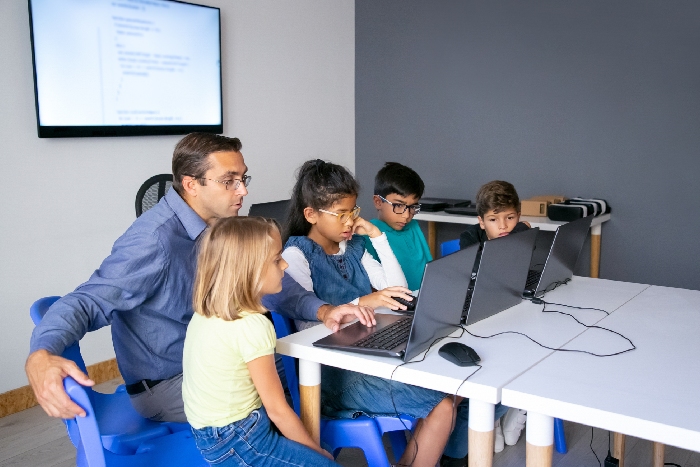
In the modern digital landscape, simply knowing how to use a smartphone is no longer enough for the next generation. At Vardhman Podar Learn School, we are cultivating a creator mindset in our students to ensure they are the innovators of tomorrow. Our curriculum integrates robotics for kids Seoni with a hands-on approach that transforms complex scientific theories into tangible inventions. By introducing coding in schools at an early age, we provide children with a universal language that sharpens their logic and problem-solving abilities. We believe that a robust STEM education is the most effective way to bridge the gap between regional schooling and international standards. As the best school in Seoni, we have invested in high-tech labs where students can experiment, fail, and succeed in a safe environment. This preparation is vital for students to secure high-value roles in the era of future jobs AI, where human creativity will be the ultimate competitive advantage. This blog explores how our technology-driven “Nayee Approach” empowers students to move from being passive consumers of technology to being the visionary creators who will design the world’s digital future.
Table of Contents
From Passive Users to Active Innovators
The Pillars of STEM Education at VPLS
Robotics for Kids Seoni: Bringing Science to Life
Coding in Schools: The New Literacy of the 21st Century
Preparing for the Shift: Future Jobs AI and Automation
Why a Creator Mindset is Vital for Personal Success
Choosing the Best School in Seoni for Tech-Savvy Parents
VPLS Group: Leading the Technological Revolution in Education
From Passive Users to Active Innovators
The youth of today are born into a world saturated with digital devices, yet many remain mere spectators of technology’s progress. Developing a creator mindset is about changing this dynamic by teaching children that the world is something they can build and modify. At Vardhman Podar Learn School, we encourage students to look under the hood of their favorite apps and gadgets to understand the mechanics within. This shift in perspective fosters a sense of agency and confidence, allowing children to see themselves as problem-solvers rather than just consumers. By empowering them to create their own digital tools, we ensure they are not intimidated by the pace of change. A child who views technology as a canvas for their imagination is much better prepared for the complexities of the modern world.
The Pillars of STEM Education at VPLS
STEM education is the bedrock of our academic strategy, integrating Science, Technology, Engineering, and Mathematics into a cohesive learning experience. We move away from siloed subjects to show students how these disciplines interact in the real world to solve actual problems. Our labs are not just rooms for observation; they are makerspaces where students use mathematical logic to solve engineering hurdles. This integrated approach sharpens their analytical skills and teaches them to look at challenges from multiple angles. We believe that a strong grounding in STEM is essential for any child who wishes to lead in the global economy. By fostering a culture of inquiry and evidence-based learning, we prepare our students to be the scientific leaders of the “Nayee Generation.”
Robotics for Kids Seoni: Bringing Science to Life
Introducing robotics for kids Seoni has revolutionized how our students perceive the physical application of their classroom lessons. Robotics is the perfect medium for teaching physics and geometry because students can see the immediate result of their calculations in the movement of a machine. When a student builds a robot to navigate a maze, they are learning about sensor calibration, motor torque, and iterative design in a fun, engaging way. This hands-on experience demystifies engineering and makes it accessible to children of all ages. We have seen that students who might struggle with abstract textbooks often flourish when given a robotic kit to assemble and program. Robotics teaches them the value of persistence, as they must constantly troubleshoot and refine their designs to achieve their goals.
Coding in Schools: The New Literacy of the 21st Century
In the modern professional arena, coding in schools has become as fundamental as reading and writing. Coding is not just about building software; it is about learning how to think in a structured, logical sequence. At VPLS, we start with visual programming for younger kids to teach them the “grammar” of logic before progressing to advanced languages. This foundational skill helps students excel in other subjects like math and creative writing by improving their organizational skills. As they learn to speak the language of computers, they gain the ability to automate tasks and create their own digital universes. This technical fluency is a key component of our global curriculum, ensuring our students can compete in any international tech hub.
Preparing for the Shift: Future Jobs AI and Automation
The rise of Artificial Intelligence is reshaping the global job market at an unprecedented speed. Preparing for future jobs AI requires a combination of high-tech literacy and uniquely human traits like empathy and creativity. We teach our students to work alongside AI, using it as a tool to amplify their own capabilities rather than fearing its growth. Our curriculum emphasizes the ethics of AI and the importance of data literacy, ensuring our students are responsible digital citizens. By focusing on high-level cognitive tasks, we ensure our graduates are ready for roles that require human intuition and complex decision-making. We are committed to making sure that the youth of Seoni are the ones managing the AI systems of the future.
Why a Creator Mindset is Vital for Personal Success
A creator mindset extends far beyond the computer lab; it is a life skill that fosters resilience and optimism. A person with this mindset does not wait for opportunities to be handed to them; they create their own. In our classrooms, we celebrate the process of creation, including the many mistakes that happen along the way. This teaches students that failure is not a dead end but a vital source of data for the next attempt. Whether they grow up to be artists, entrepreneurs, or scientists, this proactive attitude will be their greatest asset. By encouraging children to build, dream, and innovate, we are giving them the keys to a fulfilling and independent life.
Choosing the Best School in Seoni for Tech-Savvy Parents
Parents who want their children to stay ahead of the curve recognize VPLS as the best school in Seoni for modern education. Our commitment to technology is reflected in our world-class infrastructure and our highly trained faculty who are experts in their fields. We provide an environment that is both safe and challenging, where students can explore the furthest reaches of their potential. We bridge the gap between rural geography and metropolitan opportunities, ensuring our students have access to the same resources as any big-city school. Our success is measured by the confidence and technical proficiency of our students. When you choose VPLS, you are choosing a school that views the future as a landscape of endless possibilities.
VPLS Group: Leading the Technological Revolution in Education
The VPLS Group is a pioneer in bringing a “Nayee Approach” to the Indian education sector, backed by nearly a century of academic leadership. Our brand is synonymous with innovation, quality, and a deep focus on the 360-degree development of every child. Our USPs include our exclusive Growth Gears program, our state-of-the-art school infrastructure Seoni, and our commitment to building a creator mindset. We offer a comprehensive suite of services that integrate traditional values with the latest technological advancements. Our mission is to nurture independent, tech-savvy leaders who are ready to make a positive impact on the world. By joining the VPLS family, you are investing in a tradition of excellence that prepares your child for the challenges and opportunities of the 21st century.
FAQs
How can robotics for kids Seoni help in developing critical thinking at a young age?
Robotics encourages critical thinking by presenting children with physical challenges that require a logical and structured approach to solve. When a student builds a robot, they must analyze how different components interact and predict how the machine will behave based on their code. If the robot doesn’t function as expected, the child must engage in troubleshooting, which involves identifying the error and testing various solutions. This hands-on problem-solving process teaches them to look at a situation from multiple perspectives and to think several steps ahead. Ultimately, it builds a brain that is wired to find creative and efficient solutions to complex problems.
Why is coding in schools considered as important as traditional subjects like Math?
Coding is often called “the new literacy” because it is the fundamental language used to build and control the modern world. Like Math, it teaches students about logic, patterns, and sequences, but it adds a layer of creative expression that traditional subjects sometimes lack. Coding allows students to apply mathematical concepts in a practical way, such as using geometry to draw shapes or algebra to manage game variables. In a global economy that is increasingly driven by software and automation, having a basic understanding of code is essential for career versatility. Furthermore, it sharpens the mind’s ability to organize thoughts and communicate complex instructions clearly.
What specific skills are included in a comprehensive STEM education curriculum?
A comprehensive STEM curriculum includes a mix of technical skills like data analysis and programming, along with “soft skills” like collaboration and inquiry. Students learn how to use the scientific method to test hypotheses and how to apply engineering principles to build working prototypes. It also involves mathematical modeling to understand real-world trends and the use of technology for advanced research and communication. Beyond the technical, STEM education focuses on curiosity—the drive to ask “why”—and the resilience to keep trying until a solution is found. These skills combined ensure that a student is both a capable technician and a creative visionary.
How will future jobs AI differ from the jobs we see in the market today?
Future jobs in the AI era will shift away from repetitive, data-entry, or manual tasks toward roles that require high-level human oversight and creativity. While AI can process information quickly, it lacks the ability to understand social context, ethics, or emotional nuances, which is where human workers will thrive. We will see the rise of roles like “AI Ethicists” who ensure machines act fairly, or “Human-Machine Collaborators” who manage the interface between automated systems and people. Jobs in healthcare, environmental planning, and creative industries will be enhanced by AI, requiring workers who can use tech to solve complex human problems. Preparing for these roles means focusing on skills that machines simply cannot replicate.
Can a creator mindset be taught to children who do not have a natural interest in tech?
Yes, because a creator mindset is a way of looking at the world, not just a set of technical skills. For a child interested in art, it might mean using digital tools to create animations; for a child interested in stories, it might mean coding an interactive narrative. The goal is to show children that they have the power to influence their surroundings through their own ideas and efforts. By providing diverse creative outlets, schools can help every child find a medium—whether it’s wood, clay, or code—that sparks their desire to build. Once a child experiences the satisfaction of creating something from scratch, that proactive mindset stays with them for life.